

Home Blog Page 420

President to launch Zimplats Cattle Ranching Project

0

The President of Zimbabwe His Excellency Emmerson Dambudzo Mnangagwa is today launching a cattle ranching project owned by the country’s largest platinum producer, Zimplats in Ngezi.


The Zimplats Palmline Investments Cattle Ranching Project has 3 types of cattle; the Commercial/Beef Herd (1493), the Waygu (Japanese Cow) herd (178) and the Dairy herd (851).

Role of tribute agreements in mining

0

Introduction 

This article seeks to give readers insights into mining tribute agreements as these are quite common in the mining sector and are regulated by the Mines and Minerals Act (Chapter 21:05) (the Act).

Key definitions

According to section 283 of the Act, a tribute agreement means any agreement or arrangement whereunder any person has given a tribute, licence, concession, authority or other right to mine a mining location to a tributor and any agreement to alter the terms of a
tribute agreement, which has been approved by the Mining Affairs Board (MAB) and any renewal of a tribute agreement which has been approved by the MAB.

In relation to a tribute agreement a tributor means the person who has been granted the right to mine a mining location under a tribute agreement. A grantor means any person who has under a tribute agreement given a tributor the right to mine a mining location. A mining location means a defined area of ground in respect to which mining rights, or rights in connection with mining, have been acquired under the Act or which were acquired under any previous law relating to mines and minerals.

Registration of tribute agreement

According to section 280 of the Act if any holder of a registered mining location has agreed in writing to grant a tribute or any other limited right to work such mining location to any other person, hereinafter called the tributor, such tributor may, after such agreement has been approved in terms of this Act apply to the mining commissioner (now known as provincial mining director) for the registration of a notarial deed embodying the terms of such agreement in the office of such mining commissioner, where a register shall be kept in which particulars as to such agreement shall be entered.

The particulars of the tribute agreement shall include:

The names of the parties to the agreement; and The name and registered number of the mining location or the registered number of the mining lease to which such agreement relates; and The date upon which the rights conferred by such agreement commence and expire.

It is emphasised that the tribute agreement has to be in the form of a notarial deed.

In terms of section 280(6) any agreement registered in terms of this section shall, while it remains in force, be binding upon any person who acquires the ownership of such mining location or any interest therein, and it shall not be lawful for the holder of such mining location to abandon the whole or part of such location during the period that such agreement remains in force.

Approval of tribute agreement

It is a requirement in terms of section 284 of the Act that the terms of every tribute agreement shall be reduced to writing and such agreement, together with the prescribed number of copies thereof shall be submitted to the mining commissioner for examination
and approval by the MAB or the mining commissioner.

Approval by the mining commissioner

Sections 285(1) provides that the MAB may authorise the mining commissioner to approve any tribute agreement which conforms to a standard agreement drawn up and approved by the MAB. If he or she approves the tribute agreement, the mining commissioner shall report such approval to the MAB, the occupier or the owner of the land concerned and furnish the MAB with a copy of the agreement.

In terms of section 283(3) of the Act if the mining commissioner does not himself approve a tribute agreement he shall submit the agreement to the MAB for consideration.

Approval by the Mining Affairs Board

According to section 286, if upon examination of any tribute agreement which has been submitted to it by a mining commissioner, the MAB may approve the agreement and shall endorse such approval thereon and shall inform the owner or occupier of the land
concerned, if satisfied:

That the method of fixing the tribute royalty payable to the grantor and the rate of such royalty are satisfactory and are not likely to retard the progress or expansion of the mine or bring about the early cessation of mining operations, and

That the interests of both the grantor and the tributor are adequately safeguarded, and

That the period of such agreement is clearly defined and, if termination of the agreement by notice is provided for, that the interests of the parties are adequately protected.

That the development work required by the agreement is reasonable in the circumstances and is not unduly burdensome or likely to cause the premature cessation of mining operations on the mine, and

That the tributor is required to carry out sufficient development work to ensure the continuity of mining operations on the mine, and
That the grantor is entitled periodically and at reasonable times to inspect the mine and satisfy himself that the terms of the agreement are being observed and That in all respects the agreement is satisfactory and likely to result in the mine being mined to the best advantage.

Disclaimer

This simplified article is for general information purposes only and does not constitute the writer’s professional advice. Due to the numerous laws involved frequent changes are inevitable. To be compliant organisations and individuals are advised to consult adequately.

Godknows Hofisi, LLB(UNISA), BAcc(UZ), CA(Z), MBA(EBS,UK) is a legal practitioner / conveyancer with a local law firm, chartered accountant, insolvency practitioner, registered tax accountant, consultant in deal structuring, business management and tax and is an experienced director including as chairperson. He writes in his personal capacity. He can be contacted on +263 772 246 900 or
[email protected].

CMED acquires electric cars

0

Zimbabwe is starting to embrace electric cars with the Government, through the Central Mechanical Equipment Department (CMED) buying six electric vehicles from a Chinese company.

Some of the cars are now being used at its driving school, EasyGo, and the rest as shuttle cars at the Robert Gabriel Mugabe International Airport.

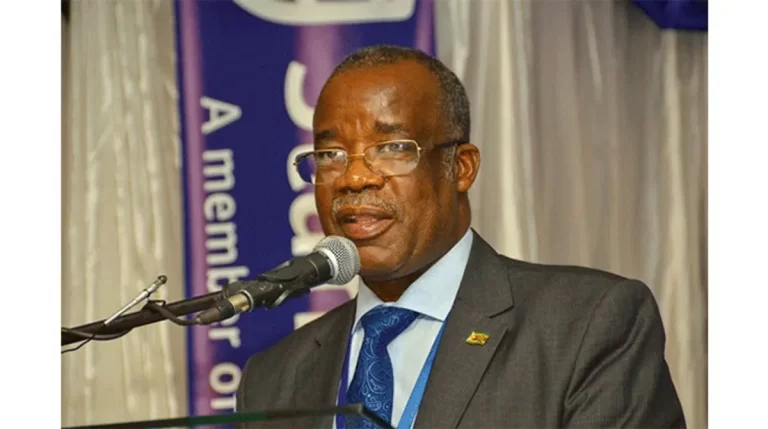
The vehicles, and the charging infrastructure now based at the CMED Harare depot, were bought by the CMED from BYD Company, which produces cars, buses, trucks, electric bicycles, forklifts and rechargeable batteries. CMED managing director Mr Davison Mhaka
has since presented the cars to Transport and Infrastructural Development Minister Felix Mhona and there are plans to buy more electric cars.

Mr Mhaka said using electric vehicles has a number of advantages, including that they are environmentally friendly, electricity is a renewable resource unlike petrol or diesel, they are less expensive and require less maintenance and are quieter than internal combustion engines.

The BYD e6 is an all-electric compact crossover/compact multi-purpose vehicle manufactured by BYD from 2009.

Field testing for the first generation model began in China in May 2010 with 40 units operating as taxis in the city of Shenzhen.

Sales to the general public began in Shenzhen in October 2011, over two years behind schedule of the originally planned release date of 2009.

By September 2009, a number of BYD e6 units were operating in fleet service as taxis in China, Indonesia, Colombia, Belgium, the US (New York and Chicago), the Netherlands, and the United Kingdom.

Since 2010, sales in China totalled 34 862 units through December 2016. The BYD e6 ranked as the best-selling pure electric car in China in 2016 and won a golden medal for “Best Quality Product” at the Havana International Fair 2015.

Electric vehicles are likely to take over from petroleum-fuelled vehicles across the world over the next two decades, a move partly driven by their own advantages and partly by the need for major reductions in carbon emissions globally. Internal combustion engines are not very efficient, while electric motors and electric power stations are. Even if the electricity is generated from fossil fuels, there is a dramatic cut in carbon emissions and as more and more electricity comes from green sources such as hydro-power, solar and wind, the carbon footprint from transport continues to be slashed.

The rise of the lithium ion battery, now used in many consumer electronics such as mobile phones and laptops, has finally provided a viable battery for electric vehicles. The global switch-over to electric cars will benefit Zimbabwe directly, since the country has abundant lithium ore deposits.

A pilot plant at Arcadia Lithium Mine near Harare was commissioned in January and if all goes well, Zimbabwe could become could become a major global supplier of lithium.

Australia-listed Prospect Resources, which secured a long-term off-take partner for Arcadia with Sibelco of Belgium, has been moving forward with its mining venture that will see high-grade lithium ore from Zimbabwe competing on world markets.

Demand for lithium is growing fast and as the world switches to electric cars, lithium consumption will grow exceptionally as the metal is the principal raw material for modern batteries.

Zimbabwe Institute of Foundries appoints Mangisi as COO

0

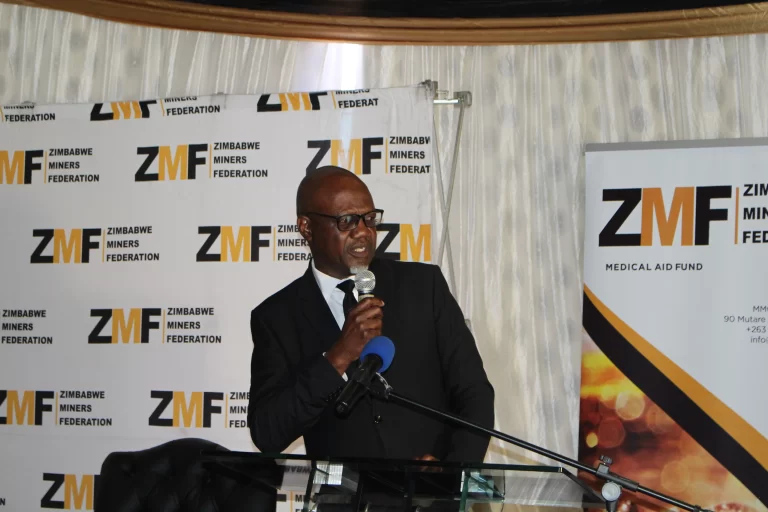
THE Zimbabwe Institute of Foundries (ZIF) has appointed Mr Dosman Mangisi, as its new chief operations officer.
Coming from the background of small to medium-scale mining, where he has been spokesperson for the Zimbabwe Miners Federation (ZMF) for seven years, Mangisi had previously served as the national executive committee member of the ZIF board responsible
for marketing and communications.

His passion for developing the potential of small-scale miners and their contribution to mainstream economy has over the years endeared him with the metal foundry industry in the country.

“I’m excited to assume the reins in the most challenging sector, which deals mainly with base metal industries,” said Mr Mangisi while confirming his appointment.

“Value addition and beneficiation of metals is critical to the turnaround of any economy in the world.

“We are learning from China, USA, Germany, South Africa and other emerging economies on how they are hedging their strength from metal casting.”

Mr Mangisi said Zimbabwe has a huge potential if it fully develops the metal industry value chain, which was one of the anchors since pre-independence times.

He said companies such as the now-defunct Zisco, ZimAlloys, Zimasco and Zimcast should be capacitated to drive massive growth in line with the Government’s Vision 2030 and attainment of the US$12 billion mining milestone by 2023.

“As part of our roadmap, we want to bring the ease of doing business in the metal casting sector. We want to see production of iron ore to sponge iron, harnessing scrap metal and promoting local manufacturing of metal products,” he said.

Through ZMF, Mr Mangisi has played a key role in projects such as establishment of the Bubi gold milling centre in Matabeleland North and Silobela gold centre in the Midlands, as well as forging strategic partnerships with established mining firms and the Government, among others.

Metal casting is a key sector in Zimbabwe — credited for supplying significant percentage to mining, agriculture, construction and other sectors.

“Total production of ferrous and non-ferrous metals hovers on average around 10 000 tons per annum. The sector also contributes to exports regionally,” said Mr Mangisi, who holds a Diploma in Mineral Resources Valuation from the Zimbabwe School of Mines and another Diploma in Mining and Mineral Resources Management with Zimbabwe Institute of Management.

“Metal foundries also support non-manufacturing jobs up and down the supply chain, from mining to warehousing, as well as engineering, financial and legal services.”

The ZIF is headed by Mr Itai Zaba as the president of the organisation, deputised by Mr Gary Green and Mr Vimbai Matarirano. Ambassador Zenzo as board chair. Mr Reason Purazeni is the executive secretary with Mr Cephas Mubvuta as treasurer.


The Chronicle

BREAKING: Gvt announces school opening dates

0

Cabinet says school will re-open on the 30th of August for examination classes and on the 6th of September for normal classes.

This was revealed in a Post-Cabinet Media Briefing by the Minister of Information Publicity and Broadcasting Services Senator Monica Mutsvangwa a few minutes ago.

Schools will re-open on 30 August 2021 for examination classes and on 6 September 2021 for non-examination classes. Intercity and intracity transportation for learners will be allowed during this period.

Higher metal prices to push exploration budgets up in 2022, says S&P Global

0

S&P Global Market Intelligence’s pipeline activity index points to mineral exploration budgets increasing by 5% to 10% in 2022, metals and mining analyst William Mason said in a recent online conference.

The increase is not as significant as in previous years, as a projected moderate softening of most metal prices from current levels weigh on the outlook.

EXPLORATION BUDGETS GENERALLY MOVE WITH METAL PRICES, OFTEN WITH A ONE-YEAR LAG

“From 2023 to 2025, we expect budgets to pull back slightly as the covid-19 pandemic economic recovery subsides and global economic growth returns to a more moderate pace,” Mason said during S&P’s recent State of the Market: Mining Q2-21 webinar.

The pipeline activity index levelled off in the second quarter as gains in significant drill results and positive project milestones were offset by a decrease in substantial financings, with the number of initial resource announcements unchanged.

Prospect Resources opens a race to fund its Zimbabwe lithium project

0

Prospect Resources, the Australian-listed company developing the Arcadia lithium mine in Zimbabwe, has opened bids for investors willing to fund the project.

Prospect says it has received “multiple enquiries” from “a range of international parties” willing to be involved in the project.

Last year, Prospect signed a memorandum of understanding with Uranium One, the Canada-based unit of Russia’s Rosatom, opening talks for a possible deal by the Russian miner to buy over half of the lithium from Arcadia mine. Russia’s Renaissance Capital was appointed advisor on the transaction.

But Prospect now says it is willing to listen to more possible partners.

“Following a review of various funding options, and in response to multiple enquiries recently received from a range of international parties in relation to funding and development of Arcadia, the Prospect Board has decided to commence a structured process whereby interested parties will have the opportunity to put forward partnership proposals in a competitive environment to fully fund the Arcadia project,” Prospect says in a statement.

In December 2019, Afreximbank agreed to arrange and manage a US$143 million project finance debt facility for Prospect, and also pledged to fund and hold US$75 million of the arrangement to fund development of the mine. However, talks were delayed due to COVID-19’s impact on the capital markets.

Prospect says its new funding model will now get priority over previous plans.

“The Board is prioritising the development of Arcadia through this partnership process over other funding options, to provide more flexibility, accelerate project execution and bring the Project into production at the earliest possibility.”

Prospect director Sam Hosack said Arcadia has seen interest from “key players” for what is potentially one of Africa’s biggest hard rock lithium developments.

“We are excited with the interest from key players in the lithium sector and look forward to working with Azure and Vermilion to find the right long term partner for the funding and development of the Arcadia Mine,” Hosack said.

Azure Capital and Vermilion Partners have been handed the mandate to handle the bids.

Prospect is looking to take advantage of resurgent interest in lithium projects. Over the past week, prices for high purity lithium carbonate chemical prices have risen 10.3%, while spodumene concentrates rose 27.1% between June and July.

China’s Ganfeng, the world’s largest lithium producer, has recently bought into ASX-listed companies Core Lithium and Firefinch.

Prospect is currently optimising a definitive feasibility study, meant to confirm resources and the best way to mine them. The previous definitive feasibility study showed an estimated 15.5-year initial mine life

On June 30, Prospect commissioned its pilot plant at Arcadia Mine. The company in July increased its stake in Arcadia from 70% to 87% after buying out Farvic Consolidated Mines.


NewZwire

Prospect hunts for long-term funding partner

0

AUSTRALIA–LISTED mining concern, Prospect Resources, has started the process of finding a long-term partner for the funding and development of its flagship Arcadia Mine, a world-class asset on the outskirts of Harare.

The development comes after the Zimbabwe-focused lithium outfit successfully scaled up shareholding in Arcadia Mine to 87% in a deal worth just under US$1 million.

Following a review of various funding options, and in response to multiple enquiries recently received from a range of international parties in relation to funding and development of Arcadia, Prospect said its board had decided to commence a structured process whereby interested parties will have the opportunity to put forward partnership proposals in a competitive environment to fully fund the Arcadia project.

The board is prioritising the development of Arcadia through this partnership process over other funding options, to provide more flexibility, accelerate project execution and bring the project into production at the earliest possible, the company said in a statement Monday.

Azure Capital and Vermilion Partners have been appointed by Prospect to run this process.

Commenting on the development, Prospect managing director Sam Hosack said they were “excited with the interest from key players in the lithium sector and looked forward to working with Azure and Vermilion to find the right long-term partner for the funding and development of Arcadia Mine.”

Prospect acquired Arcadia in 2016.

Meanwhile, Prospect revealed that the optimised feasibility study (OFS) for Arcadia was being advanced on a dual-track basis by leading engineering consulting group, Lycopodium Minerals.

It said the two development pathways under evaluation through the OFS process were a two-stage development to 2.4 Mtpa throughput, via progressive construction of two 1.2 Mtpa modules.

This approach provides a lower upfront capital pathway to production and allows project and market risks to be managed progressively.

It is also being advanced through a single-stage development to a 2.4 Mtpa throughput operation. This approach provides greater development efficiencies and higher economic returns, but with higher upfront capital requirements. Completion of the OFS on the two-stage development remains on track for the third quarter of 2021 while the single-stage OFS is now expected to be completed during the fourth quarter of this year.

Prospect this month revealed that it had identified two significantly-sized rare earth elements (REE) anomalies at its Chishanya Carbonatite Project in south-eastern Zimbabwe, the Dorowa area.

The fresh discovery gave the ambitious firm an opportunity to diversify into other high-demand minerals.


NewsDay

Lack of mining statistics in Zimbabwe a course for concern

0

LACK of public access to relevant and accurate extractives (mining, oil and gas) information remains a major issue for Zimbabwe.

Since the decline of the agricultural sector, mining emerged as the leading sector for economic revival.

In 2012 mineral exports accounted for 64% of total exports.
Incredibly, there is no “single point of truth” in government with respect to statistics on geological data, mineral production, trade and exports and licenced sites and other relevant information as is the case with other mining countries like Australia.
Comprehensive exploration and geological surveys were last done in the 1980s.
Yet country prides itself of having a rich diversity of minerals which include gold, diamonds, platinum, chrome, iron ore and coal, among others.

Statistically, the country is said to have more than 60 known minerals, 40 of which are being exploited.

Other reports rank Zimbabwe second after South Africa on platinum reserves and that it hosts 15% of global chromite reserves.

Diamond estimates are also stated as ranging between 20-30% of potential world production.
Such big numbers have always generated public euphoric beliefs of economic revival and development.

The big numbers and statistics are not supported by current and reliable geological data and reports.

The country does not even have a mining cadastre system resulting in over-pegging of mining claims.

Glaring variations and discrepancies exist between statistics held by different government departments. Diamond production, export and revenue statistics are an example of the level of inconsistencies.

Government is failing to make the country attractive to genuine investors, except a few opportunists taking advantage of a desperate government.

The mix also includes often shady and less known Chinese entities that do not respect labour, environmental and human rights standards.

The forbidding political situation in the country has been blamed for discouraging foreign investments due to fear of security of tenure and unpredictable legal and political developments.

Given this scenarion, the informal mining entities heavily outweigh large- and small-scale mining.

The number of unlicensed artisanal miners is considerably high and increasing particularly in the gold sector.

High licencing fees, long distances to licencing offices, onerous and costly environmental requirements affect artisanal miners.

Low gold prices offered by government entities have led to a flourishing black market and smuggling of gold.

Further, many artisanal miners have no knowledge of mining, environmental, safety and health laws.

Currently, government is proposing legalizing artisanal mining but so far, no concrete legal steps have been taken.

While some domestic and multinational companies are still operational, most are operating below normal capacity utilisation levels.

Management of state entities has been weak, unaccountable, and not significantly beneficial to the country.

The state is also an active player in mining and marketing of minerals through its various State-Owned Enterprises like the Zimbabwe Mining Development Corporation (ZMDC) and Minerals Marketing Corporation of Zimbabwe (MMCZ).

Despite its strategic economic importance and potential, mining continues to give rise to economic problems.

Corruption and lack of transparency and accountability in licencing, contract negotiation and revenue distribution stand as the main challenges.

Some of the problems are linked to the old legal and institutional framework run on a political patronage system that affects effective and beneficial contract negotiation and oversight by parliament.

Further, there is no public disclosure of disaggregated revenues and contracts.

An attempt at promoting public disclosure of revenues through the Zimbabwe Mining Revenue Transparency Initiative (ZMRTI) in 2012-2013 was peremptorily rejected by the Ministry of Mines and is in limbo.

It was part of efforts to create a domestic version of the Extractive Industries Transparency Initiative (EITI).

Going forward, we will push for workable measures and tools to promote transparency and accountability in the coming five years through the Publish What You Pay coalition.

Tax evasion, illicit financial flows and undeserved tax exemptions are some of the challenges in the mining sector.

The Mines and Minerals Act gives too much power to the Minister of Mines to offer tax exemptions to mining companies without public or parliamentary scrutiny for appropriateness. This deprives the country of revenue.

In addition, illicit financial and mineral flows are another challenge. There is a perceptible increase in criminality, smuggling and leakages of minerals such as gold and diamonds at mines and across the country’s borders due to poor monitoring systems and low prices offered.

Therefore, in the coming five years, our focus will be on finding ways and tools to fight tax evasion, illicit financial and mineral flows and corruption.

Violations of environmental, economic, social, cultural rights and other freedoms in the mining sector are increasing.

We are ready to fight this scourge. Mining causes loss of land, displacement of communities without compensation, pollution of rivers and loss of livelihood sources.

The rights of workers are also not being respected particularly at Chinese mines where working conditions are slavish.

State participation in mining through state owned companies has led government to abdicate its duty to protect the people.

State complicity in human rights violations may be linked to failure to apply and implement the concept of business and human rights as enunciated in the UN Guiding Principles on Business and Human Rights.

Further, compliance with and monitoring of Environmental Impact Assessments to address potential impacts and risks on communities by mining companies and environmental authorities has been very weak.

In all this, what has been missing is a community based social accountability tool and or an independent EIA Monitoring Protocol that can be used to assess compliance EIA commitments.

Implementation of the Indigenization and Economic Empowerment Programme while noble, is another controversial issue we will deal with.

Many Community Share Ownership Schemes face transparency and accountability challenges including misuse of funds, manipulation by politicians, failure to consult or report back to the people on operations and absence of a clear and predictable legal and policy implementation framework.

What also remains as a major challenge, is the existing old and colonial legal architecture especially the Mines and Minerals Act.

The Act does not adequately deal with environmental protection, transparent issuance of mining rights and public disclosure of mining revenues.

Since 2007, there are several stalled legal reform processes initiated by government such as the Mines and Minerals Amendment Bill, Draft Minerals Policy, Income Tax Bill, Sovereign Wealth Fund Bill, a diamond law, and exploration law. Up to now nothing has materialized. in the coming five years.

A detailed analysis of the above and other challenges in the extractive and mining sector are included in a mining and extractive sector programme document ZELA produced in 2013. ZELA ENDS//

miningindex

Mthuli: We may use half of IMF funds to shore up currency

0

Zimbabwe will use more than half of the US$961 million it has been allocated by the International Monetary Fund in the form of special drawing rights to support its beleaguered currency.

The government abandoned a 1:1 peg between a precursor of the reintroduced Zimbabwe dollar and the greenback in February 2019. The currency now trades at 85.82 to the US dollar and even lower on the black market, a plunge that’s made it difficult for the government to get it accepted locally, and it’s generally not tradable outside the country.

“For the support of the currency we want to hold back about $500 million,” Mthuli Ncube, Zimbabwe’s finance minister, said on Tuesday.

The rest of the SDRs will be used to support the acquisition of COVID-19 vaccines, investments in schools, hospitals and roads and other priorities, Ncube said.

Revolving funds will also be set up to help manufacturers and mining companies buy new equipment, and to revive the horticulture industry by encouraging the cultivation of roses, macadamia nuts and blueberries, he said.

The resources won’t be used to pay down any of the more than US$8 billion in external debt the country owes even though its arrears have effectively blocked Zimbabwe from borrowing more money from multilateral lenders.


Ncube also confirmed the government was considering borrowing money from private creditors to compensate the White farmers.

Zimbabwe has agreed to pay the farmers US$3.5 billion, half of which is due in July next year, to settle the two-decade old dispute that’s soured relations with Western countries, including the US and the UK.

“The idea is a special-purpose vehicle out of which we can then raise resources on the back of some escrowed tax revenues from specific sources that are ring-fenced,” Ncube said, adding that the tax could be in the form of mining royalties.

Zimbabwe exports platinum, gold, nickel and chrome.

Another proposal under consideration is the local sale of a US dollar bond, the minister said.

___

Bloomberg