Two workers died in an accident at Glencore’s Zambian operation Mopani Copper Mines (MCM) on Tuesday, prompting it to suspend production pending investigations, the company said.
“All operations at the South Ore Body (shaft) have been suspended until further notice,” the company said in a statement without providing details of the accident.
Mopani is one the biggest mining companies in Zambia — Africa’s No. 2 copper producer — with output of about 100,000 tonnes a year. It was not immediately clear how much production would be lost during the suspension to production._Reuters
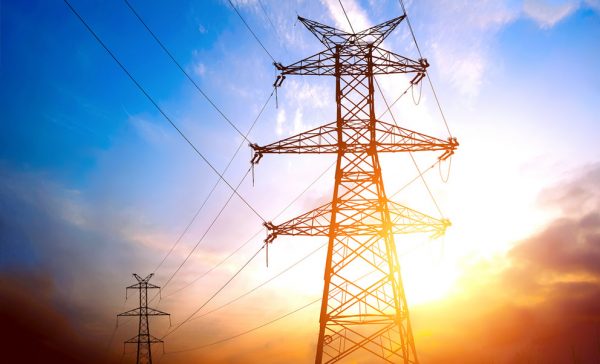
South Africa’s state-owned power utility will implement controlled blackouts for a sixth straight day to prevent a total collapse of the electricity grid amid a shortage of capacity.
Eskom, which supplies almost all the power in South Africa, will cut 4,000 megawatts of supply from 9 a.m. until 11 p.m. on Tuesday after doing the same on Monday
Eskom Holdings SOC Ltd. is racing to bring generating units back online after suffering outages last week that were compounded by a loss of power imports from neighboring Mozambique as a result of a cyclone. The staggered power cuts, aimed at reducing demand pressure on the grid, are crippling businesses and leave roads gridlocked in cities throughout Africa’s most-industrialized economy.
Eskom, which supplies almost all the power in South Africa, will cut 4,000 megawatts of supply from 9 a.m. until 11 p.m. on Tuesday after doing the same on Monday. It will shift to so-called stage 2 — cutting 2,000 megawatts — overnight Monday.
The utility is seen as one of the biggest risks to the country’s economy, burdened by operational and financial woes stemming from years of mismanagement and massive cost overruns on two new coal-fired power stations that should have been completed in 2015.
Round the clock
South Africa’s mining industry faces risks sending workers underground when the electricity supply is unstable, said Shaun Nel, a spokesman for the Energy Intensive Users Group of South Africa. The group’s members consume more than 40 percent of the nation’s power and include Anglo American Plc. Smelters also “can’t come on and off so quickly, so companies are switching them off completely,” he said.
The utility had planned to replenish water and diesel supplies typically used for peak generation over the weekend, however power cuts were increased after the cyclone that struck Mozambique ended its electricity imports. It’s not likely they’ll resume over the next few days, according to Eskom.
Maintenance teams “are working round the clock to return generation units to the electricity system,” the Johannesburg-based producer said in an emailed statement. The cuts are “no cause for alarm as the system is being effectively controlled,” it said, adding that during stage 4 load-shedding, about 80 percent of the nation’s demand is being met._Bloomberg News
Russian state-controlled miner Alrosa will assess the quality of Zimbabwe’s diamond reserves over the next six months but would only start mining if it can take a majority stake in such a project, the company’s chief executive said on Monday.
Zimbabwe is seeking to attract investment and has scrapped legislation that restricts foreign participation for some commodities. It has yet to do so for diamonds and platinum but has said that it will.
Zimbabwe is seeking to attract investment and has scrapped legislation that restricts foreign participation for some commodities
“Of course we’ll only be ready to participate in projects in cases where we can have management control and operational control of the assets,” Alrosa CEO Sergey Ivanov told Reuters.
That would mean a stake of at least 51 percent, he said, adding that he would be confident of achieving that if it gets to the stage of detailed discussions on how to advance a project.
Russia, along with China, has been a political ally of Zimbabwe since the days of its independence war against British rule, and this year Zimbabwe selected Alrosa and China’s Anjin Investments to partner its state diamond company.
Alrosa, the biggest diamond producer by volume, as well as Anglo American’s De Beers, the biggest in value terms, both say supply will shrink in the coming years as mines, such as Rio Tinto’s Argyle project, become depleted.
Laboratory-grown diamonds will add some supply. But Alrosa, like De Beers, says man-made stones are a separate market and have no re-sale value, in contrast to natural gems.
De Beers last year began marketing laboratory diamonds as jewellery for the first time, but Ivanov said that Alrosa has no interest in following suit.
The company is, however, expanding in Africa, where Zimbabwe and Angola remain under-explored.
Last year Alrosa said it was increasing its stake in Angola and Ivanov expects a deal to increase Alrosa’s stake in Angola, first flagged last year, will close “in the near future”. Alrosa and the Angolan government would each have a 41 percent stake, with the rest held by Chinese investors.
Ivanov said stake size is not the only consideration and in Angola the company has reached agreement on corporate governance, transparency and has established an advisory board.
Alrosa is also protecting itself against the impact of U.S. sanctions by building trading infrastructure to allow transactions in currencies other than dollars, amounting to “a couple of percent” of its business.
He said it would not be rational to switch totally from dollars because that could disort the market.
“But in case there’s some geopolitical escalation, we should be able to switch to other currencies,” he said, citing Indian rupees, Chinese RMB and euros._Reuters
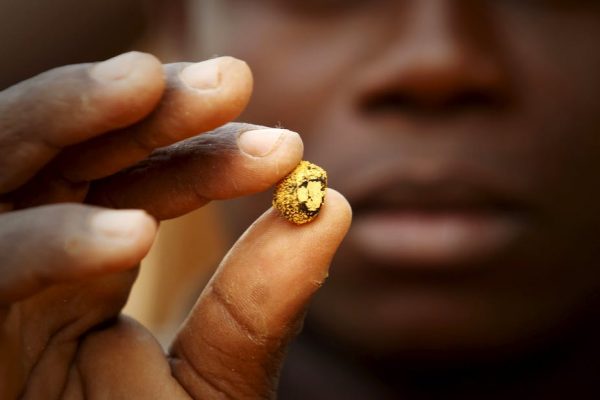
Tanzania has ordered all mineral-producing regions in the East African nation to set up government-controlled trading centres by the end of June, accelerating efforts to curb illegal exports of gold and other precious minerals.
The trading centres will give small-scale miners direct access to a formal, regulated market where they can go and directly trade their gold. They currently struggle to access formal gold dealers who mostly based in the capital Dar es Salam and major towns.
A statement from the prime minister’s office said the first mineral trading centre was inaugurated in the northwestern town of Geita on Sunday, close to the country’s biggest gold mine owned by South Africa’s AngloGold Ashanti.
Small-scale miners produce around 20 tonnes of gold per year in Tanzania, but an estimated 90 percent of the output is illegally exported
“All mineral-producing regions should set up these trading centres as soon as possible to serve small miners,” the statement quoted Prime Minister Kassim Majaliwa as saying while commissioning the centre in Geita.
The Geita centre would serve as a model for others, the statement said, adding the centres were aimed at controlling smuggling of gold and other minerals.
Small-scale miners produce around 20 tonnes of gold per year in Tanzania, but an estimated 90 percent of the output is illegally exported, according to a report by a parliamentary committee.
Tanzania is Africa’s fourth-biggest gold producer after South Africa, Ghana and Mali and gold exports are a key source of foreign exchange.
It exported gold worth $1.549 billion last year, up slightly from $1.541 billion in 2017, central bank data shows.
President John Magufuli, who took office in late 2015, is pushing for more revenues from the mining sector, which is a relatively small contributor to national output.
In 2017, the government passed laws that the industry complained would be costly and onerous. Among other things, the laws hike taxes on mineral exports, mandate a higher government stake in some mining operations and force the construction of local smelters, a move some companies said was uneconomic.
Magufuli also ordered the central bank in January to start buying the country’s gold to curb smuggling and build reserves to stabilise the local currency.
Tanzania has also been locked in a prolonged conflict with London-listed Acacia Mining after authorities banned exports of gold and copper concentrates and accused the miner of tax evasion, which it denies.
Majaliwa said the trading centres will be jointly supervised by officials from a state-run mining commission and the state revenue service. They will also have banks to provide financial services to the dealers and miners._Reuters
Mark Bristow taking over the leadership of Barrick Gold Corp. facilitated negotiations with Tanzania about a multibillion-dollar tax dispute that could be resolved by May, the country’s attorney general said.
Barrick unit Acacia Mining Plc has been at odds with Tanzania’s government since July 2017, when the state handed it a $190-billion tax bill, saying the gold producer falsely declared bullion exports. Bristow was named Barrick chief executive officer in January, and the following month the company said it’s reached a settlement proposal with the government.
Ideally, Tanzania would want a 50 percent stake in the new company that will run Acacia’s mines
“It has rationalized things a little bit,” Adelardus Kilangi said of Bristow’s appointment. “I think within one, two months a deal will be struck.”
Shares in Acacia rose as much as 4.9 percent in London, the most since Feb. 20, the day Barrick announced the initial settlement proposal.
Barrick, which owns 63.9 percent of Acacia, said at the time the plan includes the gold producer paying $300 million to resolve outstanding tax claims, and the two parties sharing the “economic benefits” of Acacia’s operations on a 50-50 basis with the state. The government may end up with a larger share than that in the final deal, Kilangi said on the sidelines of a conference in Maputo, Mozambique’s capital.
“At the end of the day, the country will actually get more,” he said. “If you add up to that the taxes and other revenues, remittances, it will probably go to 65 percent to 70 percent.”
Ideally, Tanzania would want a 50 percent stake in the new company that will run Acacia’s mines, said Kilangi. The government has been negotiating with Barrick not Acacia, as Barrick holds the mineral development agreement, he said.
The timing of any deal would depend on Barrick “solving their internal issues” with Acacia, said Kilangi, without elaborating._Bloomberg News
Botswana’s Debswana Diamond Mining, a joint venture between De Beers and the southern Africa country’s government, have awarded Thiess’ subsidiary CIMIC a $1.2-billion contract to extend the lifespan of their Jwaneng mine.
Jwaneng, which began operations in 1982, is currently 650 metres deep, but its owners want to deepen the pit to 830 meters (2,700 feet), which will allow continuing operations for another 11 years, to 2035, and extracting a further 53 million carats.
Debswana will invest approximately $2 billion over the life of the project, dubbed Cut 9, which involves removing waste from the bottom of the mine to both widen and deepen the pit.
Jwaneng, which began operations in 1982, will continue in operations unit 2035.At its peak, Cut-9 is expected to create more than 1,000 jobs, the majority of which will be held by locals.
“With global consumer demand for diamonds reaching record levels in 2018, the extension will enable us to continue to meet the needs of our consumers all over the world,” Debswana’s chairman Bruce Cleaver said in the statement.
This is not the first time Debswana decides to invest in expanding Jwaneng, the world’s No.1 diamond producing mine by value, which contributes almost 70% of the partnership’s total revenue.
Debswana was formed in 1969 as a 50/50 partnership between the Botswana’s government and De Beers Group. The unit is a significant contributor to the country’s economy with more than 80% of its profits going back to Botswana’s citizens.
Diamonds from Debswana bring in about 50% of public revenue, representing 33% of GDP and over 80% of foreign earnings to Botswana.
When you think of investing in precious metals, you probably think about gold and silver. It makes sense. These metals have been widely accepted as currency and stores of value for centuries. But newer types of metals have recently broke into the mainstream precious metals industry, providing investors with more ways to diversify their portfolios.
Platinum and palladium are growing in popularity as investment metals, largely due to their scarcity and industrial uses. Though gold and silver remain the most popular investment metals, you can now find a small assortment of platinum and palladium coins and bars on the market. Let’s take a closer look at what makes these metals an attractive investment option.
Limited Supply
Platinum was discovered in the 1700s when traces of the metal were found lining gold mines in South America. Spanish conquistadors considered the metal to be a nuisance that blocked what they truly sought. However, it is now known that platinum is far more rare than gold and extremely valuable. In fact, platinum is so rare that the entire amount of mined platinum is believed to fit into an average living room.
Nearly 100 years later, palladium was discovered by William Hyde Wollaston while he was working on a process to purify platinum. Today, palladium is still often found as a byproduct of platinum extractions. And palladium is believed to be even more rare than platinum—possibly up to 15 times as rare. Palladium is largely sourced in South Africa, as well as the US, Canada, and Russia.
Growing Industrial Demand
Though you may see jewelry and designer watches made of platinum, the metal’s main use is in the making of catalytic converters for cars. In fact, nearly half of the platinum supply is used in the auto industry. Additionally, platinum is used in dentistry and in the making of medical machinery electrodes.
Palladium, a metal very similar to platinum, has several of the same industrial applications. It too is used in the automotive and medical industries, as well as being alloyed with gold to make white gold jewelry pieces.
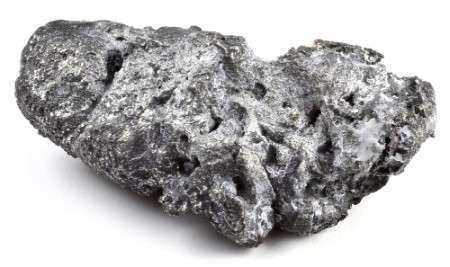
Raw Platinum
Since these metals are crucial in the manufacture of vehicles, we can expect demand to rise in countries that produce cars. In recent years, China has surpassed the US as the world’s largest automobile producer. It’s likely that we’ll see an increasing demand for platinum and palladium in China because of the automobile industry, as well as emerging technological markets that may also make use of the metals.
Though it’s believed that palladium is more rare than platinum, palladium is actually a cheaper metal. Why? Platinum and palladium are very similar metals. The main difference is that platinum is much denser than palladium. That means that platinum can be manipulated more without breakingl. This makes it the more valuable of the two in terms of industrial uses. However, the similarities between the metals means that many businesses are turning to palladium when possible because of the lower price.
Investing in Platinum and Palladium
Stackers have taken a greater interest in platinum and palladium in recent years. The growing uses for the metals make them attractive as a potential investment option. Platinum and palladium have yet to reach the popularity of gold and silver, largely due to a constricted supply. On top of supply, the prices of platinum and palladium tend to be more volatile than the prices of gold and silver.
With these factors in mind, platinum and palladium tend to attract serious investors more than casual investors. And the investors who are drawn to platinum and palladium may find that options are far fewer than those for gold and silver. You can find platinum and palladium coins and bars from reputable sovereign and private mints, but there are fewer designs and smaller mintages available. After all, the platinum and palladium bullion industries are much newer than the gold and silver bullion industries.
However, serious investors might want to take note of the metals’ recent success. Demand and spot price for both platinum and palladium have been steadily climbing for some time now. These metals might provide a good option for you if you’re looking to expand your investment portfolio.
Palladium prices surged to a record on Tuesday, bolstered by worries about shrinking supply of the auto-catalyst metal, while gold rose on expectations that the U.S. Federal Reserve will maintain a dovish tone at its policy meeting this week.
Spot palladium was up 0.3 percent at $1,588.53 an ounce, as of 0339 GMT, after marking an all-time high of $1,591 earlier in the session.
“The demand has been an ongoing narrative for a while. So, the fundamentals are strong and there is an ongoing supply deficit problem,” said Ilya Spivak, a senior currency strategist at DailyFX.
Expectations for more economic stimulus by China, the world’s biggest auto market, could also be a short-term catalyst for the market, Spivak said.
Prices have nearly doubled since the mid-August lows and have already surged about 26 percent for the year.
Palladium has continued to firm despite weak car sales as news that Russia is mulling a ban on scrap and tailing exports threatens to further tighten an already tight market, TD Securities wrote in a weekly note.
Russia is a major producer of the metal, which is used mainly in catalytic converters.
Meanwhile, spot gold rose 0.3 percent at $1,306.76 per ounce, as the dollar languished near two-week lows hit in the previous session on growing expectations the Fed would shift to a more accommodative policy stance.
U.S. gold futures rose about 0.4 percent to $1,306.80.
“Gold has been edging up and the main driver is a softening dollar,” Margaret Yang, a market analyst with CMC Markets, Singapore said adding the Fed’s decision and Brexit vote could be gold boosters in the short term.
The U.S. central bank will start its two-day meeting on interest rates later in the day.
“If the Fed is more dovish than expected, dollar is likely to move lower, and there is a lot of uncertainty surrounding Brexit with hedging demand for safety.”
Prime Minister Theresa May’s Brexit plans were thrown into further turmoil on Monday when the speaker of parliament ruled that she could not put her divorce deal to a new vote unless it was re-submitted in a fundamentally different form.
Gold is used as a safe investment during times of political and financial uncertainties.
Indicative of investor sentiment toward gold, holdings of the SPDR Gold Trust, the world’s largest gold-backed exchange-traded fund, rose about 1.1 percent on Monday, its biggest one-day percentage gain since Jan. 18.
In other precious metals, silver slipped 0.4 percent to $15.38 per ounce, while platinum gained 0.8 percent to $836.92 per ounce._Reuters
GOVERNMENT has said mining activities at Peace Mine in Silobela are illegal because the mine has been closed for safety reasons.
Midlands provincial mining director, Mr Nelson Munyanduri said as far as his department was concerned, the mine was closed pending inspection by responsible authorities.
“Any mining activities taking place at the mine are illegal and not sanctioned by us. As far as we are concerned, all mining activities at the mine were suspended for security reasons and we have to inspect the mine first beforemining could resume,” said Mr Munyanduri.
His sentiments follow violent clashes by two groups of miners who are fighting for the rights to carry out mining activities at the mine.
Peace Mine, which was supposed to be a model Community Ownership Scheme mine and received state of the art equipment from Government, was closed in 2016 following massive vandalism of the equipment and violent clashes by groups claiming ownership of the mine.
Following the death of then chairperson of the trust, Arthur Nkiwane in 2017, his widow, Mrs Sibusisiwe Moyo, took over the reins at the mine, a move that did not go down well with another group led by Chief Sigodo who also claims ownership of the mine.
Mrs Moyo has been carrying out mining activities at the mine and stands accused of personalising the mine instead of running it as a trust.
Mr Malanga Nkiwane, son to the late chairperson, who claims to be the operations manager at the Mine says Chief Sigodo has been disturbing operations at the mine claiming he recently sent bouncers to attack them.
“He is bent on disturbing operations at the mine claiming he owns the mine. The mine benefits more than 1 000 families and it is running smoothly as a community ownership scheme where everyone is taking turns to mine. But Chief Sigodo recently sent bouncers to attack us and order us off the mine,” said Mr Nkiwane.
Chief Sigodo, born Apollo Mlilo, said the mine belonged to him after a court ruling overturned the community ownership set up.
“For starters, I did not send any bouncers to them, they actually attacked police officers who had gone to the mine to serve them with the court papers,” said the Chief.
He said operations were stopped by Government after the community ownership trust collapsed after the Nkiwane family turned the mine into a family project.
“Mines officials closed the mine pending further assessments but they continue to mine thereby putting people’s lives at risk. I am urging Government to intervene before another disaster similar to the Battlefields one is witnessed,” he said.
Mines and Mining Development Minister, Winston Chitando, recently told Parliament that the ownership wrangle was delaying the mine’s restructuring programme and its reopening. He was responding to Silobela legislator, Mthokozisi Manoki-Mpofu’s question as to what was delaying the reopening of the mine.
“With respect to Peace Mine, the mine has initially been under wrangle in terms of ownership of the mining claims. The long and short of it is that there is a tribute agreement, which expired in October 2017 and the registered owner of the claims has indicated that he is not renewing the tribute. So the issue at the moment is between the owner of the claim and those who wish to mine to enter into a valid tribute agreement,” said Minister Chitando._The Chronicle
THERE are plenty opportunities available in Zimbabwe’s mining sector that could be exploited by both local and foreign investors.
By Keith Sungiso
Zimbabwe has about 60 mineral occurrences, the major ones being diamond, platinum, gold, nickel, lithium, chrome ore, iron ore, tantalite, asbestos, coal, granite, zinc and silver among others.
Research also shows that Zimbabwe has six out of 10 of the world’s most valuable minerals.
This massive resource base creates lucrative opportunities for investors in exploration, mining, and beneficiation, among others.
Here are 10 Mining opportunities currently available in Zimbabwe right now and many years to come
Mining exploration
While addressing delegates at the 2018 Mining, Engineering and Transport expo held in Bulawayo in October, Mines and Mining Development Minister Winston Chitando admitted that the country has no record of its untapped mineral resources because there has not been any exploration work for the past decades.
This means Zimbabwe has been boasting of its vast mineral wealth without knowing exactly what is underground.
So, exploration is a very big opportunity which arises in the mining industry, which those with financial muscle can take advantage of.
But this type of investment would require high amount of capital. In other words, it is not ideal for small scale miners.
2. Mining
Investors would also want to invest in mining activities in the country. As said earlier, Zimbabwe boasts of a huge and highly diversified mineral resource base dominated by prominent geological features, namely, an expansive craton, widespread greenstone belts (also known as gold belts), the famous Great Dyke, Precambrian and Karoo basins and metamorphic belts, according to government records.
Investment opportunities exist in the mining of gold, diamond, platinum, nickel, lithium, chrome ore, iron ore, tantalite, asbestos, coal, granite, zinc and silver, among others.
This could be done through joint ventures with Zimbabwe Mining Development Corporation, small-scale miners and other miners facing financial constraints. For instance, according to the Zimbabwe Mining Potential Booklet, there are over 4,000 recorded gold deposits, nearly all of them located on ancient workings. The same document identifies the country as having chrome reserves on the Great Dyke of approximate 10 billion tonnes. Deposits hosted outside the Great Dyke occur in some ultramafic rocks of the Shurugwi, Mashava and Belingwe greenstone belts, and ultramafic bodies in the Limpopo Mobile Belt.
3. Mining beneficiation
As alluded above, Zimbabwe is richly endowed with bountiful mineral resources but the southern African nation has not been deriving meaningful benefit from its mineral reserves as the country has always been exporting its mineral wealth in raw form.
For years, the country has been exporting the majority of its minerals unprocessed.
There is a need for the country to derive meaningful benefit from its mineral resources by adding value into its minerals.
Given that the government is still grappling with the economic woes that have dogged the resource-rich nation over the past few decades, those with capital could chip in.
To date, about five pilot value chains have since been identified as energy, stainless steel, pigment production, auto catalyst and diesel particulate filters, diamond processing and jewellery making.
Other vast investment potential is in the areas of platinum refinery, chrome smelting, diamond cutting and polishing, platinum refinery among others.
The Mines and Minerals Bill draft requires a proportion of mineral output to be reserved for use in local value-adding activities and sold locally at a developmental price.
Zimbabwe Miners’ Federation (ZMF) President, Henrietta Rushwaya told Mining Zimbabwe that they were looking forward to more investment coming into the country especially with regards to chrome sector.
“We are looking at more investment coming in, especially in the chrome sector,r which is a bit short-changed for now because of the high financial requirements that go with the machinery. If you are a chrome miner, you would need an excavator, a dump truck, but as long as you don’t have that within your reach, it is difficult for you to mine chrome at a large scale,” she said.
4. Long-term capital
Mining is capital intensive. According to Chamber of Mines of Zimbabwe (CoMZ) the mining sector needs fresh capital investment to ensure that positive growth and viability is maintained.
The mining body says mining companies need over US$7 billion to recapitalise their operations over the next five years, from 2018 to 2022.
But the challenge is that local financial institutions have not been offering long-term capital, making it difficult for mining companies to borrow for recapitalisation or to sustain output growth or undertake new projects.
Most of them need to replace antiquated equipment that has become inefficient and costly.
So there is an opportunity for mining investors to chip in and explore these massive opportunities available in the sector.
5. Machinery funding
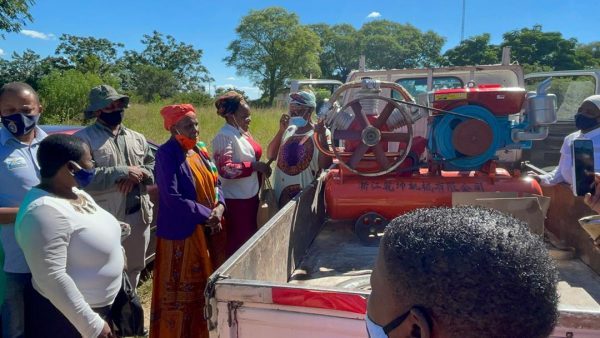
Small-scale miners told Mining Zimbabwe that they needed machinery to carry out their activities.
“We need small machinery that carries the order of the day in the gold mining industry. For instance, with the rain season looming, you find that our miners lack small machinery like compressors, dewatering pumps, generators, explosives,” Rushwaya said.
“These are some of the small items where we are saying if people come up with organised-based mining within the communities where they operate, it’s easier for the government, for instance, to assist in their form of scheme. Our miners are not keen to receive funding in the form of cash. They are keen to receive funding in the form of the machinery. Let’s empower them with requisite machinery, and that way we won’t go wrong,” she said.
6. Employment opportunities: Women
For every direct mining job approximately three jobs are created in other sectors. Jobs are created in the industries that either supply goods and services to the mining sector, or use mining products for downstream value addition and so on. The mining sector is estimated to employ 45 000 people formally and about 200 000 people informally. Women can find employment at different stages of the mining value chain. The industry also offers employment to both skilled and non-skilled women.
For skilled women, the sector absorbs women trained in technical fields such as geologists, metallurgists, technicians and also those with soft skills, such as accountants, lawyers, and human resources practitioners.
As such, women and youth must take advantage of the employment opportunities that arise in other sectors through increased local content and enhanced linkages in the mining industry.
7. Training opportunities
Mining is a technical sector. Possession and utilisation of requisite skills are one of the key determinants of the viability of mining projects. Apart from free technical advice from the Ministry of Mines and Mining Development, small scale miners, including women should pursue other training options, particularly with the Zimbabwe School of Mines (ZSM).
ZSM offers short training courses and diplomas at affordable rates. So, ZSM and other institutions should take advantage of this and offer tailor-made courses for small-scale miners.
8. Goods and services
Mining sector in Zimbabwe has created more than 45,000 formal jobs and more than 500,000 artisanal miners. With such huge numbers, women and youth can supply goods and services such as catering, personal protective, financial services, drilling, metallurgical, geo-mechanics, to name just a few, throughout the mining value chain.
9. Gold buying agents
The government, through its gold buying unit, Fidelity Gold and Refinery, has issued about 21 gold buying licences for small-scale miners in a bid to stop illicit gold outflows.
Rushwaya said the move by the government has made their members gold buying agents.
“So our small-scale miners are now going to be gold buying agents in various gold mining districts where they operate. So if you are a member, for instance, Umzingwane Association, one of your association members would be a buyer. This has been necessitated by the fact that there are certain quantities Fidelity Gold does not buy,” she said.
“If you are producing less than 5 grams, Fidelity does not buy. So, all those who are producing less than the various stipulated quantities have been disadvantaged in the sense that they are now selling their gold in the black market. Now that Fidelity has accorded us the opportunity to acquire those buying licences.
She said they started with a number which they thought could be used for experimental purposes, “which is 105 agents.”
10. Electricity supply
One of the challenges faced by the mining sector is the cost of electricity, which has remained high, hampering the viability of mineral producers.
Current commercial tariffs from the Zimbabwe Electricity Transmission and Distribution Company on average range from $0,13/kWh for on-peak usage, $0,07/kWh for standard usage, to $0,04/kWh for off-peak usage.
This is the highest in the region.
Such challenges present a good opportunity for players in the energy sector to establish power generation plants in the country to cater for these miners.
To provide the best experiences, we use technologies like cookies to store and/or access device information. Consenting to these technologies will allow us to process data such as browsing behavior or unique IDs on this site. Not consenting or withdrawing consent, may adversely affect certain features and functions.
Functional
Always active
The technical storage or access is strictly necessary for the legitimate purpose of enabling the use of a specific service explicitly requested by the subscriber or user, or for the sole purpose of carrying out the transmission of a communication over an electronic communications network.
Preferences
The technical storage or access is necessary for the legitimate purpose of storing preferences that are not requested by the subscriber or user.
Statistics
The technical storage or access that is used exclusively for statistical purposes.The technical storage or access that is used exclusively for anonymous statistical purposes. Without a subpoena, voluntary compliance on the part of your Internet Service Provider, or additional records from a third party, information stored or retrieved for this purpose alone cannot usually be used to identify you.
Marketing
The technical storage or access is required to create user profiles to send advertising, or to track the user on a website or across several websites for similar marketing purposes.