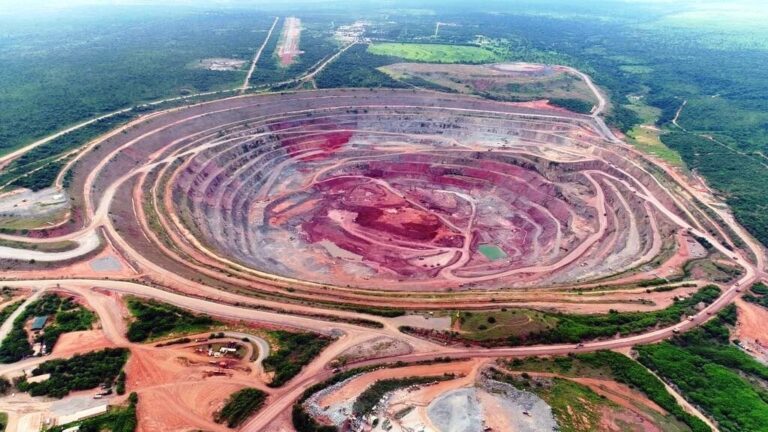
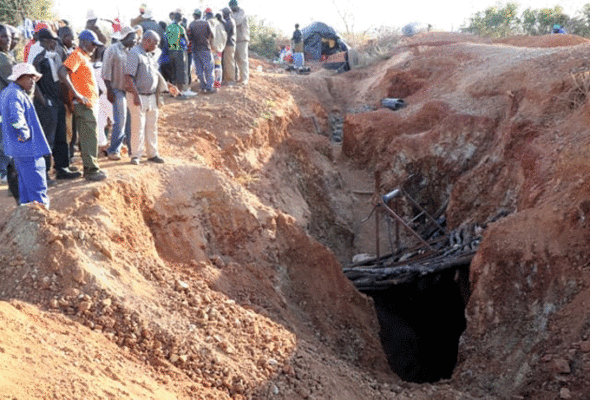
Over 25000 arrested under operation Chikorokoza Ngachipere
Muzarabani oil, gas drilling start early 2022
INVICTUS Energy, the Australian firm hunting for oil and gas in Muzarabani, may start drilling exploration wells early next year, after taking delivery of massive state -of -the –art- equipment to be used in identifying well sites.
Managing director Scott MacMillan said the more than 20 truckloads of seismic survey equipment offloaded at Durban Port, were now on their way to Beitbridge, en-route to a workshop in Harare before being deployed in Muzarabani.
Seismic survey is a method used in exploration, especially for oil and gas, to gather sub-surface vibrations that may help identify the exact locations of or existence of hydrocarbons.
This will be followed by the sinking of test wells to confirm whether the geologies of identified locations harbour pockets that trapped sediments that decomposed and turned into commercially viable oil or gas deposits.
‘The timeframe is being dictated by the lead time for fabrication of well heads and casing, which is currently 6-7 months. So, at this stage (drilling is) more likely next year,” MacMillan said.
He said Invictus needed to wait for completion of the seismic data to be processed and interpreted so that “we can locate the well site properly”. That process will be finished towards year end, he said.
The Invictus boss said the seismic survey was a “big deal and first time it has been done in the country for 30 years”. The last serious oil searches were done by French oil giant Mobil in the early 1990s.
Since a single test well may be four kilometres deep and cost up to US$15 million to US$20 million to drill, Invictus is keen to ensure that the first well is sunk in the best possible location.
The Australian exploration junior awarded experienced Canadian firm Polaris Natural Resources the contract to undertake the seismic survey, a way of mapping geology through sub-surface vibrations.
Mines and Mining Development Minister Winston Chitando said following successful delivery of the equipment in Durban on Thursday last week, the equipment would be in Beitbridge by tomorrow.
“It is expected in Beitbridge in the next three to four days enroute to a workshop in Harare for service checks for a week or so before proceeding to Muzarabani,” Minister Chitando said.
Invictus Energy, an Australia Stock Exchange (ASX) listed company, has posted major milestones in its quest to discover oil or gas in Zimbabwe, after reinterpretation of Data gathered by Mobil.
After being verified by independent experts, the results showed encouraging evidence of potential existence of significant hydrocarbons in the Cabora Bassa Basin encompassing the Muzarabani prospect.
The delivery of the equipment for the seismic survey follows the approval by President Mnangagwa of the firm’s Petroleum Exploration and Product Agreement (PEDPA) in April this year.
President Mnangagwa said the PEDPA agreement would provide a pathway for Zimbabwe to exploit its hydro carbons while discovery of commercial oil and gas deposits could bring significant downstream economic benefits.
The benefits expected include energy self-sufficiency, production of petro-chemicals, increased revenue to the fiscus, growth of exports, new jobs and emergency of downstream industries, among others.
Invictus said earlier the PEDPA signed with the Government provides the framework for progression of the oil and gas project through exploration, appraisal, development and production phases as well as obligations and rights of each party during the project lifecycle.
As part of the building blocks for Vision 2030, by which Zimbabwe should have attained upper middle income economy status, the Government is working on growing mineral exports from US$3,7 billion to US$12 billion a year.
COMMENT: Govt should earn millions of dollars from exporting electricity
ZIMBABWE continues to make progress in its efforts to improve power generation and end load shedding. Last Thursday, a Chinese company Zimbabwe Zhongxin Electrical Energy (ZZEE) announced that the first phase of its thermal power plant on the outskirts of Hwange town is 100 percent complete.
The plant is expected to start feeding 25MW into the national grid in September and this will be increased to 50MW in October.
The company which is rolling out its plants in phases said work on the second phase comprising two plants that will produce 135MW each is expected to start early next year while the third phase is scheduled to be completed in 2025.
This involves the construction of another two plants that will each produce 300MW that will be fed into the national grid.
The construction of a 5MW solar plant is also almost complete and is expected to go online in the next two weeks in the same district.
The plant is being developed by Solgas company which says it plans to establish similar plants in all the provinces to complement Government efforts to improve power generation.
The $1,5 billion Hwange Thermal Power Station expansion which entails the addition of units 7 and 8 is about 70 percent complete. This is expected to add a combined 600MW to the national grid. The units 7 and 8 together with the existing plant will generate an average of 1 300 MW.
The country has indeed achieved a major milestone towards self-sufficiency in power generation that will guarantee both commercial and domestic consumers adequate electricity.
The mining sector which is among the critical sectors that the country is banking on to turn around the economy needs adequate electricity throughout the year.
We are therefore, encouraged by the private companies that have started implementing power generation projects and we want at this juncture to implore those that are yet to do so to start work.
The target should be to produce not just enough to meet national demand but also surplus for export. Government working closely with the private sector is aggressively marketing the country as an investment destination of choice and one of the investors’ demands is uninterrupted electricity supplies.
Government has over the years been spending millions of dollars importing electricity from companies such as Eskom of South Africa and Hydro Cahora Bassa of Mozambique and this has to change. The country should in future earn millions of dollars from exporting electricity to the region and with the private sector support, this is very possible.
Amplats H1 earnings soar, declares record dividend
Anglo American Platinum (Amplats) on Monday posted a near 7-fold increase in half-year earnings and paid a record dividend as higher metals prices and increased output boosted profit, sending its shares higher.
“It is a record payout on the back of record results,” said Amplats CFO Craig Miller.
Shares in Amplats, an Anglo American subsidiary, gained 6.26% by 0858 GMT.
High prices for metals extracted by Amplats, including platinum, palladium and rhodium, have boosted profit with the average rand prices for the platinum group metals (PGM) it mines up 29% during the period.
Earnings before interest, taxes, depreciation and amortisation (EBITDA) during the period rose 385% to a record 63.3 billion rand with net cash at 57.6 billion rand.
The Johannesburg-listed miner said refined production during the half-year jumped 128% to 2,326,700 ounces, boosted by the completion of the rebuild of unit A at its Anglo Converter Plant (ACP) processing facility in 2020.
Amplats declared force majeure and cut its production outlook after an explosion at the ACP plant last year halted processing activity.
The miner tightened its PGM annual production guidance to between 4.2 to 4.4 million ounces from between 4.2 to 4.6 million ounces, due to lower third-party receipts and the impact of rising covid-19 infections on output.
Amplats expects platinum to be in surplus in 2021 before shifting to deficit in the next few years boosted by increased demand.
Reuters
Coal mining byproduct highly effective for land reclamation
A researcher at the University of Alberta in Canada has discovered that nano humus, a substance extracted from coal mine deposits and then crushed to a black, powdery material is highly effective at helping reclaim the land and water used in mining.
In Zhao’s view, her findings offer the potential option for a low-cost, more efficient way to remediate industrial wastewater and soil affected by resource extraction and manufacturing processes. This, she said, is of particular relevance in developing countries.
NANO HUMUS HAS “OUTSTANDING PHYSICAL AND CHEMICAL PROPERTIES” THAT REMOVE HEAVY METALS FROM CONTAMINATED WATER AND SOIL
She also noted that conventional remediation treatments for heavy metals use large amounts of chemicals which, in turn, can produce further contaminants that require treatment. Some remediation methods also require large amounts of electricity or can take days or months to complete.
However, nano humus and similar compounds can be used not only for quicker remediation of contaminants, but can also contribute to soil-building by partially or completely replacing the bulkier materials of manure and straw typically used to amend the soil.
In a media statement, the researcher said that now she would like to partner with Canadian industries in mining reclamation to field test the nano humus.
Zhao believes that moving from lab research to industrial-scale application will help to determine the actual costs and efficacy of using the material under natural environmental conditions.
Copper price highest in 6 weeks as flooding in China raises supply concerns
Copper prices jumped on Monday as floods in China sparked demand hopes at a time when inventories are falling.
Benchmark copper on the London Metal Exchange was up 0.9% at $9,604.50 per tonne in official trading, after touching its highest since June 16 at $9,665 per tonne.
Click here for an interactive chart of copper prices

Floods in central China, especially in the industrial and transport hub city of Zhengzhou in Henan province, have raised supply concerns and demand for rebuilding damaged infrastructure.
Flooding has caused at least $10 billion in damage, according to state media.
“Sentiment has brightened again in the last few days, reflected in the copper price,” Commerzbank analyst Daniel Briesemann said, adding he believed copper was due for a correction.
A Singapore-based trader said the market was pricing in disruptions to output from floods in Henan and demand for reconstruction.
Copper prices have been advancing after China revealed that will release fewer metals reserves than expected.
China will sell another 30,000 tonnes of copper, 90,000 tonnes of aluminum, and 50,000 tonnes of zinc at auction from its state reserves on July 29.
The auction will mark the second sale this month as the government aims to rein in skyrocketing commodity prices.
“It is slightly less than the market expected but it should be priced in already as it’s pretty well flagged,” said Anna Stablum, a commodities broker at Marex Spectron.
Mining.com(With files from Reuters)
Prospect invests US$1m in fresh Arcadia deal
ZIMBABWE-focused lithium outfit, Prospect Resources moved close to taking full control at its flagship Arcadia Mine on Friday, after scaling up shareholding to 87% in a deal worth just under US$1 million.
The Australia Stock Exchange-listed firm previously held a 70% stake in the asset that has recently been reporting significant progress towards full-scale mining and exportation of lithium at Arcadia, a world-class asset on the outskirts of Harare.
Prospect acquired Arcadia in 2016.
In 2018, the firm said it would be increasing shareholding upon signing a conditional agreement with another shareholder, Farvic Consolidated Mines.
Under the deal, Farvic agreed to transfer its 17% equity in Prospect Lithium Zimbabwe, the firm that controls the Arcadia lithium project, to Prospect Minerals, a wholly-owned subsidiary of Prospect Resources.
Friday’s transaction saw the sides exchange A$1,18 million, about (US$874 257) in cash and 9,4 million shares, according to Prospect managing director Sam Hosack.
“Completing the Farvic transaction provides an immediate benefit to Prospect Resources as it now owns an additional 17% of the quality Arcadia lithium project,” Hosack said in a note to shareholders.
“The increase in ownership will have a major positive impact on our funding of the Arcadia lithium project,” he said.
Prospect had announced at the beginning of this year that the sale and purchase agreement with Farvic would be extended to December 31, 2021.
However, it appeared that requisite regulatory approvals were secured much earlier, giving the two sides the right to conclude the deal.
But most importantly for Prospect, the firm has been funding 100% of the project’s overheads, which means Friday’s transaction gave it an opportunity to increase its share of future revenues and profits from the mine, without an increase in expenditure.
Prospect’s shares on the ASX traded at 18,2% higher at 32,5 cents at 4:10pm on Friday, an indication of the market’s positive sentiment about the deal.
Last week, Prospect said it had produced 25 kilogrammes of spodumene concentrate from core samples collected at Arcadia Mine.
Spodumene is considered the most valuable lithium ore mineral, which is crushed to form a concentrate before shipment to chemical-manufacturing companies worldwide.
The firm is targeting strategic markets in Japan, China and Europe, as it fine-tunes its systems before full-scale production kicks off.
There has been significant progress by companies prospecting and developing lithium assets in Zimbabwe.
Early this month, London Stock Exchange-listed Premier African Minerals said results from its drilling programme at Zulu Lithium near Bulawayo were encouraging.
The developments mark an important step in the southern African country’s ambition to transform its mining industry, turning over about US$2 billion annual revenue, into a US$12 billion sector by 2023.
Following recent finds, Zimbabwe has placed its lithium assets at the heart of this ambition, and also looks to gold, platinum and diamonds to drive the expansion drive.
About four lithium projects are currently under development in Zimbabwe, where firms including Premier and Prospect expect to invest up to US$300 million in the coming years to reach full
production.
Premier said the results of the samples confirmed significant lithium grade and lithium mineralisation.
Zimplats to build 200MW solar power plant at platinum operations
Zimplats has applied for a licence to install close to 200MW of solar power to feed operations at Ngezi and Selous, where it is spending US$290 million in additional investment to grow platinum output.
The country’s biggest platinum producer wants to build a 105MW plant at Ngezi, where Zimplats operates mines and two concentrators. Another 80MW will be installed at the Selous metallurgical complex, where a concentrator and a smelter are located.
According to a notice by energy regulator ZERA, a 132kv solar plant substation will be built at Ngezi. The company will run a 5km line from the plant to the Ngezi mine substation. At Selous, lines will run for 500m to the existing 132kV line.
Zimplats currently depends on electricity supply from Cahora Bassa’s hydro station in Mozambique, but the company is adding solar to secure reliable supply and earn more sustainability credits.
“All investors want to understand is what are you doing to decarbonise and to become a more sustainable business,” said Johan Theron, a spokesman for Implats, Zimplats’ holding company. “It’s a concern about the future and whether everybody is doing their bit. If we do nothing and we continue to use coal power like we use today, then in 10 to 20 years we will have a problem.”
In February, Implats CEO Nico Muller said building solar power for its Zimbabwe operations was part of the company’s growth strategy in the country.
Said Muller: “In Zimbabwe, we are totally reliant on power generation from the Cabora Bassa scheme, so all our power there is renewable energy, so that’s probably the cleanest platinum being produced on the planet at the moment. In addition to that, in Zimbabwe we are in the midst of a feasibility study to evaluate the construction of a 200MW solar power plant, and that will provide not only the 80MW at Zimplats, but also the 30MW that we use at Mimosa, and in there is sufficient amount of energy to feed into the grid as a broader in-country strategy.”
Implats is currently investing US$290 million on new mine development. The new Mupani Mine and the redeveloped Bimha mine will add another 180,000 ounces.
Mines going solar
Zimplats is one of many mining operations in Zimbabwe investing in renewables. Steady power supply is one of the major concerns for miners in the country.
Caledonia Mining raised US$13 million to fund a 12MW solar plant at its Blanket Mine. The plant, being built by French company Voltalia, is expected to be completed in early 2022.
Gold producer RioZim has also been licensed to install solar power with an initial combined capacity of 75MW at its four mines.
The government expects 100MW of electricity to come from new renewable energy projects by the end of this year. Zimbabwe believes that mines will, going forward, account for a larger portion of solar power.
“You will find that new power generation will come from mining companies establishing solar projects. By 2023, we will have over 600MW of power from projects undertaken by the mining sector,” says Mines Minister Winston Chitando.
Last year, government tendered for 500MW of solar power, announcing incentives that include duty-free imports for equipment and five-year tax breaks.
Relocated Chiadzwa Villagers Spend 2 Months With No Water
VILLAGERS, relocated to the Agricultural Rural Development Authority (ARDA) Transau in Odzi, Mutare West to pave way for diamond mining in Marange, have spent the past two months without water after their reticulation system broke down.
The villagers were relocated to the area in 2009 to pave way for massive diamond mining by the government and some Chinese companies.
For the past two months, the villagers have been forced to walk for long distances in search of precious liquid after their water reticulation system, maintained by the state-entity Zimbabwe National Water Authority (ZINWA), broke down.
ARDA Transau Relocation Development Trust (ATRDT) representative Tawanda Mufute told a Constitutional Talk Series meeting last that over 1 000 families at the farm were living at risk of communicable diseases as they had no access to water.
The meeting was organised by a local rights group Green Governance Zimbabwe Trust (GGZT).
ARDA Transau is a sprawling 1 200ha government-owned farm.
“We have gone for two months without access to clean water. The situation is exposing us to water-borne diseases such as cholera and typhoid as villagers rely on unprotected sources,” said Mufute.
He said companies mining diamonds in Marange, their former homes, should take responsibility and ensure people relocated to ARDA Transau had access to health care and other basic amenities.
“When it comes to natural resources and governance, mining companies must take responsibility and ensure communities in where they operate have access to information, health care, and other basic amenities.”
However, Mufute said companies mining diamonds in Marange had neglected the local communities and were only concerned with extracting gems for their benefit.
A legal expert from the Zimbabwe Lawyers for Human Rights (ZLHR), Peggy Tavagadza urged the ARDA Transau villagers to actively defend their basic rights.
She said local communities should be prepared to carry the primary burden of demanding and defending their constitutional rights.
“There is a pending case that was filed by ZELA on behalf of the community with regards to access to water. ZLHR cannot approach the courts again hence let us wait for what the courts will say about the ARDA Transau issue,” she said.
ZELA stands for Zimbabwe Environmental Law Association.
“There is a need for communities to assert and defend their rights. Many people always think of litigation as the first option when seeking remedies to rights violations, which is very wrong,” she Tavagadza adding the government had the responsibility to provide basic to the citizens.
“Demand the right to water from the relevant ministry because it is the responsibility of government to provide water for its citizens. The government has got the responsibility to provide basic needs for the communities.”
GGZT communications advisor, Donald Nyarota said a legal framework must be in place to protect local communities against the environmental, social, and economic costs of mining.
“Unfortunately, domestic legal frameworks are weak to, either contain human rights violations by businesses or extend benefits to communities. There is need for extensive legal reforms, contract transparency, and communities should be consulted.”