

Home Blog Page 744

Zim to get more from diamonds

0

TIRED of pocketing crumbs from the sale of raw diamonds that naturally fetch less on the global market, Government has launched an audacious bid to join the big league by wading into the value addition and beneficiation sector.

The thrust of adding value and beneficiating diamonds is captured in the diamond policy that was approved by Cabinet a fortnight ago.

In the period 2009 to 2016, rough diamonds were sold at between US$40 and US$80 per carat.

Sources say the bulk of the diamonds were sold at about US$53 per carat, depriving the country of meaningful economic value and sparked concerns that gems were looted by a small clique of bigwigs.

Last week, President Emmerson Mnangagwa indicated that it was time the country moved into the mega-bucks value-addition sector.

“This new (diamond) policy protects the national interest, while meeting the expectations of the Kimberley Process Certification Scheme,” said President Mnangagwa.

“The equity structure which the policy prescribes firmly secures our national interest. So, too, does its interest in and coverage of all stages of the diamond value chain, which are exploration, mining, processing, sorting and valuation, beneficiation and value addition, marketing, capacity building, security and compliance.

“. . . this means Zimbabwe must move and stay as close as possible to where real value is. This is the import of our diamond policy, which incorporates a valuation centre, a school of gem training, and a whole special economic zone for jewellery manufacturing and retailing.”

Statistics show that global rough diamond sales generate between US$15 billion and US$18 billion.

Rough diamond sales is the first stage of the diamond value chain, while cutting and polishing diamonds is the second stage, which fetches anything between US$20 billion and $24 billion.

On the upper rung of the diamond value chain ladder is the jewellery retail market, which attracts revenues of between US$70 billion and US$72 billion.

President Mnangagwa said it was imperative that the country taps into the billions of dollars that accrue from value addition.

“Clearly, the greatest value does not reside with the miner at Chiadzwa. Rather, it resides with the diamond trader somewhere in Antwerp, Surat, Tel Aviv or New York who dresses the customer’s finger,” he said.

This year, the Zimbabwe Consolidated Diamond Company (ZCDC) has a stretch target of 3 million carats.

Between January and October, ZCDC had hauled 2,4 million carats, which is considerably above the 1,8 million carats mined all of last year.

Considering that diamond occurrences have been noted in most parts of the country, including Midlands and Matabeleland South, analysts say it is imperative that value addition is expedited to ensure more revenue is generated.

Value addition cuts across all minerals.

The 2019 National Budget underscores the need for value addition and beneficiation.

Finance Economic Development Minister Professor Mthuli Ncube said Zimbabwe’s thrust is to add “value and beneficiate more through processing and refining of minerals and link processed and refined minerals to the manufacturing sector in order to industrialise”.

Government is finalising the Mineral Value Addition and Beneficiation Policy designed to improve domestic smelting and refining, to take advantage of the immediate scope for income and exports generation offered by minerals such as platinum, chrome, lithium, nickel, diamond, copper, gold and coal.

As value addition gathers pace, the platinum sector has already complied with Government aspirations, with President Mnangagwa set to commission Anglo-Platinum’s smelter at Unki Mine in Shurugwi this week.

“I am set to officially launch this much-awaited investment next week, thus enabling our mining industry to move one more step further up the platinum value chain,” said President Mnangagwa.

In 2014, Government directed the country’s three platinum mining firms — Zimplats, Unki and Mimosa — to construct a precious metal refinery to ensure local beneficiation to stem possible leakages of minerals amid fears the miners were not declaring all proceeds from other minerals associated with platinum such as gold.

The deadline to construct a platinum refinery was January this year.

Towards end of last month, Johannesburg Stock Exchange-listed Anglo American Platinum (Amplats) announced the completion of a US$62 million platinum group metal (PGM) smelter at Unki.

The smelter is expected to generate matte, a product that would be sent to Amplats’ South Africa’s base metals and precious metals refineries.

As at Wednesday last week, the price of platinum per ounce was US$834,90 while palladium, which is part of the PGMs, was fetching US$1 225,90 per ounce on the international market.

The palladium price was marginally lower than gold, which was selling at US$1 246,30.

With more platinum projects in the pipeline such as the US$3 billion Great Dyke Investments (GDI) — a joint venture between Zimbabwe and Russia — expected to be consummated when President Mnangagwa travels to Russia mid-January next year at the invitation of President Vladimir Putin, the Unki smelter will come in handy.

The US$4,2 billion Karo Resources platinum project is also taking shape.

Value addition of lithium is also set to start with President Mnangagwa earmarked to officially open the lithium carbonate plant situated in Kwekwe.

The lithium carbonate plant was installed by Australian-listed mining concern, Prospect Resources, which is set to create battery grade (+99,5 percent) lithium carbonate.

Prospect owns the US$52,2 million Arcadia Lithium Project in Goromonzi.

source: The Sunday Mail

Expanding Underground Mining Simulation Services in Africa

0

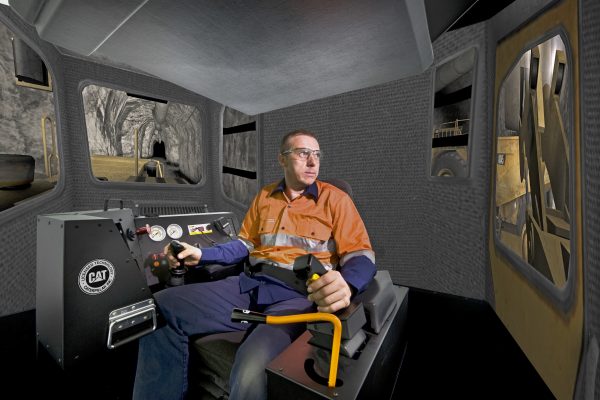
In the past five years the African region has witnessed the rapid expansion of underground equipment simulators sales from Immersive Technologies. The company has experienced a positive rise in customer’s need for underground products and services over the last years globally.

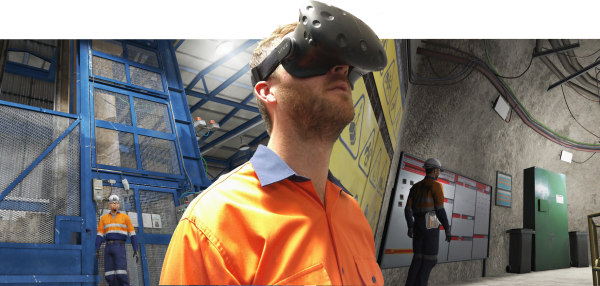
African mines are taking advantage of advanced simulation technology along with skilled people and proven processes, from Immersive Technologies, to optimise their equipment operator workforce.

Immersive Technologies’ most recent simulator deployment are located at the Subika site in Ghana and Star and Comet site in Tanzania. The deployment of underground solutions involved our IM360 transportable simulator with Conversion Kits® for underground trucks with support from on-site embedded Trainers and Advisors.

The intent for the first six months is to have simulation optimising the recruitment and capability development of new hire and existing truck, loader and jumbo operators. The longer-term goal of addressing daily operational activities such as loading and dumping, abusive shifting and fuel efficiency will be the next objective.

“We have underground customers in Africa, Russia, Kazakhstan, Saudi Arabia, Indonesia, Australia, the USA, Mexico, Colombia and Chile who are ramping up their production and place a high value on safer and more productive operators through training.

Our training solutions have been proven over time to deliver significant, quantifiable and audited results, which resonates with mining companies analysing every expenditure,” says Anthony Bruce, Regional Vice President
Africa, Europe & CIS, Immersive Technologies.

“We offer the largest range of simulated mining machines and the addition of new underground simulators aligns perfectly with the recent increase in demand for our underground products, Immersive Technologies is delivering multiple new underground simulator modules for Sandvik, Atlas Copco, Zephir and Caterpillar equipment, including some machines which are tele-remote” Anthony Bruce says.


This article first appeared in the March 2018 issue of the Mining Zimbabwe Magazine

Bonnox – Efficient fencing that lasts

0

Bonnox is well renowned for their quality and fully galvanised fencing.

Already, many farmers are aware of Bonnox’s range of fine products: The “Money Saver”, “Close Mesh”, “Kombi
Fence”, “Square Mesh”, “Multi Fence” and “Flexi Fence” were all meticulously designed to provide for every possible
need. But what sets a manufacturer apart from the rest, is the ability to promptly observe and react to new trends and needs in the market.

The prefabricated fencing market in Africa currently needs a product which is inexpensive, as farmers are              currently required to be thrifty with their money. Therefore, Bonnox decided to introduce their “ Economy “ range. The only difference between this fencing and their existing “ Elite “ range, is that it is lightly galvanised instead of
fully galvanised. Now a farmer can compare “ apples with apples “ when comparing Bonnox with competitors’
fencing products.

“There are lightly galvanised wire fences on the market, but many of our clients ask for it under the Bonnox
brand name,” says Anita Gent, Director of Bonnox. “We therefore decided to also manufacture an economical version of the nine most popular products in our range of seventy products. This includes the “Money Saver”, “Close Mesh” and “Multi Fence” ranges of 1,2m, 1,8m and 2,4 m. This offers the farmer an inexpensive solution of
fencing for his stock, small and large game. In areas where the effects of the elements are not very harsh on wire fencing, this inexpensive Bonnox will still last for many years, but fully galvanised Bonnox is still recommended
for areas where the elements affect fences more severely As the “Elite” and “Economy” ranges look exactly the same, the labels on the existing “Elite” range are green while those on the economical range are royal blue. The price of the
economical range is only 75% of the price for the existing range, but it is still being manufactured with the same
Bonnox meticulousness and care. The wire still being from the same supplier.

Skip the middleman

“Any farmer can order our products directly from our factory in Sunderland Ridge, south of Pretoria, to simplify logistics and cut costs. This also means that the farmer can gain the best advice and support directly from the
manufacturer,” Anita says.

Bonnox makes sure that there is minimal or no lead time at the factory. Bonnox keeps stock of approximately
70 different fencing varieties to suit every customer’s requirements. Bonnox is continuously looking for ways to accommodate the farmer. “For every ten rolls of fencing a farmer buys, he gets one free,” she says. “On
top of that, we offer a 25% discount. Bonnox also provides erecting equipment at competitive prices which
makes fence erection a simple matter.

Contact Bonnox’s friendly sales team to discuss your fencing needs.

Their numbers are 076- 169-9068 or + 27 012-666-8717.
visit their website at www.bonnox.co.za.

Young Zimbabwean Engineer Shines at an International Explosives Conference

0

A Zimbabwean explosives engineer made history in San Antonio by becoming the only African and the first Zimbabwean engineer to present at this year’s prestigious International Society of Explosives Engineers (ISEE) Conference. Moshen Jena was one of the keynote presenters at the recently held 44th Annual Conference on Explosives and Blasting, organised by the ISEE in San Antonio, Texas, USA. The conference took place from the 28th to the 31st of January 2018.

More than 1,700 experts in the field of explosives engineering attended the event, which is the largest of its kind in the world.

Explosives Engineer Moshen Jena presenting at the ISEE 44th Annual Conference.

The conference brings together blasters, engineers, manufacturers, researchers, academics, government officials, and industry leaders. A total of 90 papers were presented during the technical sessions, showcasing the latest technological advances in the field of explosives engineering. The conference provides a forum for the discussion of practical and technical information, as well as presentations of the latest discoveries in the commercial explosives industry worldwide.

Moshen presented a paper entitled “The Application of Underground Bulk Explosives in Polyethylene Pipes for Perimeter Control.” The paper was a case study of a system implemented over a four-year period at a platinum mine in Zimbabwe, where it has been successfully adopted. The paper was presented on the 30th of January during Session 7 – Underground Blasting.

In his paper, Moshen focused on a system of perimeter control that originated in Zimbabwe and is now becoming a standard, as more mines are adopting the technique as a cost-effective way of controlling perimeter walls. This system uses Underground Bulk System technology (emulsion explosives) placed in specially formulated polyethylene pipes to decouple the bulk explosives.

The effectiveness of this method was evaluated using information obtained during routine blast audits and data supplied by the mines on half-cast factors, overbreak, and underbreak, as well as an analysis of data from Ground Penetrating Radar (GPR) scans over a four-year period.

This method of perimeter control has given platinum miners in Zimbabwe a competitive edge in cost-effective perimeter charging and blasting by simplifying the previously costly deployment of traditional barrels and other decoupled cartridges. The method has been adopted by all platinum mines in Zimbabwe, as it has proven to be a cost-effective alternative for controlling perimeter walls, along with other key benefits related to safety, productivity, and efficiency.

It was a battle royal as the young engineer, who turned 34 in January, shared the stage with veteran international presenters from around the world. When his time came, Moshen dazzled the attendees with his eloquence, expressiveness, and knowledge of blasting science.

Moshen Jena attended St Faith’s High School in Rusape for his secondary education and studied Mining Engineering at the University of Zimbabwe. He currently works for AEL Mining Services, a leading explosives manufacturing company, as an explosives engineer.

Other notable presentations included those from keynote speaker and astronaut Mike Mullane, who delivered a powerful message on an employee’s role in keeping themselves and their teams safe in hazardous environments during his talk titled “Countdown to Safety.” He used the Space Shuttle Challenger disaster to illustrate safety consequences and how individuals and teams can defend themselves from such phenomena.

Ryan Brogden, a Principal Inspector of Explosives for the Department of Natural Resources and Mines in Queensland, Australia, also presented lessons from the Ammonium Nitrate vehicle explosion that occurred at Angellala Creek. He was the lead investigator into the incident and now leads the national working group implementing the recommendations from the explosion.

Besides the technical papers, attendees participated in training sessions on various technological advances in the explosives and blasting industry and had the opportunity to view exhibitions from leading manufacturers and service providers in the explosives sector.

In summary, the conference was an invaluable opportunity to learn, connect, and exchange experiences from different parts of the world.


This article first appeared in the Mining Zimbabwe Magazine March 2018 issue 

Zimbabwe mineral potential

0

Zimbabwe has a huge and highly diversified mineral resource base dominated by two prominent geological features namely the famous Great Dyke and the ancient Greenstone Belts, also known as Gold Belts.

The Great Dyke is a layered igneous complex extending north-south for about 550 km. The Great Dyke plays host to the world’s largest high grade chromite resource base.  Zimbabwe has the world’s second largest resource of platinum group of metals as well as significant reserves of copper and nickel.

Download the MINERAL POTENTIAL BROCHURE from Ministry of Mines

or download from mining zim server

Procedures and requirements of acquiring Mining title in Zimbabwe

0

What is a mining title?

A Mining Title is a mining grant under laws and mining regulations to a person or group of approved persons of the right to develop and exploit a properly delineated area for its mineral wealth.

In Zimbabwe, Mining Titles are issued by the Ministry of Mines and Mining Development. Applications are submitted at eight provincial offices across the country.

How to get a mining title in Zimbabwe

The following are the procedures and requirements of acquiring a Mining title in Zimbabwe

  • The Agent is required to physically peg the area by marking the deposit with a discovery peg. She should also post Prospecting, Discovery, and Registration notices on the ground. The notices must be posted in a conspicuous manner to alert other prospectors.
  • Before posting these notices the agent is required to inform or seek consent from the landowner of his intention to prospect. Note consent is only sought from the landowner if prospecting on a farm less than 100 hectares, otherwise, the prospector is only required to inform the farm/landowner in writing either by registered mail or by hand delivery.
  • All areas classified as not open to prospecting and pegging or reserved against prospecting and pegging cannot be pegged eg. cultivated land /arable lands, dip tanks, dams.
  • Each prospecting license can peg up to a maximum of 10 claims of 1 hectare each.
  • An application for registration must be submitted to the Ministry of Mines and Mining Development offices. The application must have copies of the following attachments:-

1. Prospecting license

2. Prospecting Notice

3. Discovery Notice (Base Minerals)

4. Notification of intention to prospect to the landowner

5. A map in triplicate to the scale of 1: 25 000

  • If the Provincial Mining Director is satisfied that all pegging procedures have been followed he shall issue a certificate of registration upon payment of the gazetted fee. This allows the holder to start mining operations subject to meeting other obligations like Environmental Impact Assessment (EIA).
  • Within 3 months from the date of registration, the miner is required to obtain a renewal of title. Claims have a 12-month tenure after which they shall expire or be renewed.
  • Failure to renew the title will result in the forfeiture of a mining claim. Furthermore, loss of a title can be through cancellation or abandonment.
Dr Polite Kambamura
Dr Polite Kambamura is the current Minister of Mines and Mining Development

Can Zimasset be revived?

0

Zimbabwe Agenda for Sustainable Socio-economic Transformation (Zimasset) blue print was crafted to create hope in the recovery of Zimbabwe’s economy from the jaws of economic colonisation; it aimed at improving the lives of the common people through foreign direct investment and sustaining local miners by protecting them and giving them support through different government initiatives. However, the blue print was deemed not fair on certain parts on which Zimbabwean where lamenting that it needed to be stripped off.

Dickson Rudairo Mapuranga

Mining experts are of the view that, to attract foreign and local investment in the mining industry, Zimasset needs to be fully implemented so that citizens will gain from the riches of their land. However, the government needs to review its tax laws and review tariffs, for example electricity costs are too high. Also many laws are inconsistent for example labour and corporate laws, these inconsistencies in the Zimbabwean laws may block both local and external serious  investors.

“When implementing Zimasset, the government can start by being transparent in its dealings, from there it will be easier to follow on what’s being done.” Said one expert commenting on the dangers of Zimasset being hijacked by corrupt elements.

However many experts in the mining industry are of the opinion that the Implementation of Zimasset is necessary in benefiting local people and firms, however, it is in need of serious revision to attract foreign investment. Experts believe that Zimbabwe need to identify strategic minerals that are necessary to  the growth of the  mining sector and the economy,  minerals also need to be incentivised.

“We can’t start and stop different economic blueprints without their full implementation, how then do we judge their success or failure, tough laws attract serious and tough foreign investors”, said one miner who support the idea of foreign direct investment.

Experts are of the view that Zimasset is just a policy directed at improving socio and economic environment of Zimbabwe post investment, it does not pose any effects on investment but throw away bogus investors who could be here to milky and exhaust all the riches of the land with the locals receiving near to nothing. Foreign investment in the mining sector should be offered hand in glove with mineral processing firms to decrease the high rate of raw mineral exports, the government and laws needs to be tougher when mines don’t comply.

Caledonia mine, one of the most performing mines in Zimbabwe with stakeholders: The National Indigenisation and Economic Empowerment Fund 16 percent, Blanket Employee Trust Services 10 percent, and Gwanda Community Share Ownership Trust 10 percent. Caledonia was nominated number one performing mine in Zimbabwe in 2017. Gwanda community share ownership trust shares where a donation to the community under Zimasset. Foreign firms have been accused of sending profits to mother countries, however, through Zimasset the Gwanda community enjoy the riches of their land. Thus, Zimasset was supposed to be revised not entirely strapped.

Rio Tinto found the biggest diamond ever

0

The biggest diamond ever found in North America has been unearthed by Dominion Diamond Mines and Rio Tinto Group at a mine in Canada’s frozen north.

The 552 ct yellow gem was found at the Diavik mine in the Northwest Territories, and is almost three times the size of the next largest stone ever found in Canada. While Diavik and the neighboring Ekati mine produce some very high quality diamonds, they’re not renowned for the sort of huge gems normally found in southern African mines.

Dominion Chief Executive Officer Shane Durgin said the diamond is gem quality, meaning it’s suitable for jewelry, but gave few additional details that help determine its value. Yellow stones typically sell at a discount to Type IIa top whites often found in the best African mines. Still, the highest quality fancy vivid yellow or fancy intense yellow stones can sell for a premium.

“We can label it fancy yellow, but beyond that, due to its rough nature and the abrasions received through the processing facility, that’s all we can comment on,” Durgin said in an interview. “It’s very hard to give a ballpark estimate. It all depends on, again, the cutting and the resulting stone it ends up.”

The discovery is the seventh-biggest this century, according to Bloomberg calculations, and would be among the 30 largest stones ever unearthed. The biggest was the 3 106 ct Cullinan, found near Pretoria in South Africa in 1905. It was cut into several polished gems, the two largest of which — the Great Star of Africa and the Lesser Star of Africa — are set in the Crown Jewels of Britain.

There have been a slew of big finds in recent years as better technology helped miners first detect, and then not break big stones that are susceptible to being smashed in the mining process. Among those are diamonds found by Lucara Diamond Corp. and Gem Diamonds that fetched between $40-million and $63-million.

While the Diavik mine is 60% owned and operated by Rio, Dominion bought the stone in an internal auction process from its partner. Dominion said it will select someone soon to cut and polish the stone.

“It’s a beautiful gem-quality diamond,” Durgin said, adding that it was somewhat of a “miracle” that the stone survived the mining process. “It’s very unusual for a diamond of this size in this part of the world. So it’s a very unique discovery.”

The find comes at a good time for Dominion. Since billionaire Dennis Washington bought the company for $1.2-billion last year, there’s been a management merry-go-round with at least five senior personnel leaving. That includes CEO Patrick Evans, who left last week after just over a year at the helm. Dominion needs to decide if it will pull the trigger on expansion projects that would extend the life of the Ekati mine.

The market has also been under pressure, especially for smaller and lower quality stones. There’s currently an oversupply of such diamonds, and a weaker Indian rupee has put pressure on manufacturers in the country where about 90 percent of gems are cut and polished. Major cutting centers have also been squeezed by low margins and a drop in trade finance.

source: Mining Weekly

Zimbabwe seek lithium market

0

Zimbabwe is on the verge of attaining global prominence through the widely sought after lithium after fledgling lithium mining company, Prospect Resources, recently exported 100 kilogrammes of lithium carbonate — used in the production of electric vehicles batteries — to Australia.

The lithium carbonate consignment is reportedly ready for distribution in the island nation to potential off-take partners for evaluation ahead of large-scale production in Zimbabwe.

Australia Stock Exchange (ASX) listed Prospect Resources, which owns Prospect Lithium Zimbabwe (PLZ), said the exported lithium samples were produced at its pilot plant in Kwekwe, Zimbabwe, using petalite ore from Prospect’s Arcadia Lithium Project (Arcadia).

With the successful production of lithium carbonate at its own plant, which was designed and built by Zimbabwean engineers, Prospect said it will now proceed to reconfigure the Kwekwe lithium carbonate plant from a pilot facility to a manufacturing plant.

The Arcadia Lithium project is located 38 kilometres east of Harare.

President Mnangagwa commissioned the first phase of the Arcadia lithium project, a fortnight ago at a function attended by several senior Government officials and foreign diplomats to pave way for the start of works to build the mineral ore processing plant and other support facilities including houses and offices.

Lithium mining, the President said at the ground breaking ceremony, is expected to be one of the most important sub-sectors that will drive economic growth in the short to medium term.

“Prospect’s ability to successfully produce lithium carbonate from its petalite ore at Arcadia is a first for Africa and positions the Company as one of the only companies to do so globally.

“Prospect is now able to provide samples to potential offtake partners to demonstrate the quality of the product. With this milestone achievement, the Company is now reconfiguring the pilot plant to manufacture lithium hydroxide,” Prospect said this week.

In the production of lithium carbonate, spodumene and petalite ore is processed into spodumene and petalite concentrate, which is then converted into lithium carbonate (battery grade lithium 99.5 percent Li2CO3) or lithium hydroxide.

Prospect’s Arcadia project will hoist Zimbabwe, currently the world’s 5th largest lithium producer with only a single mine operating, to much higher global production ranking and also earn the country hundreds of millions of dollars in foreign exchange annually.

Currently, only Bikita Minerals is producing, but there are four other promising projects under development namely Kamativi, Zulu Lithium in Bulawayo and Lutope Lithium (Hwange).

According to Mines and Mining Development Minister Winston Chitando, Prospect’s Arcadia lithium project, which has potential to become Africa’s largest hard rock lithium mine, will produce petalite and spodumene for production of lithium-ion batteries.

This comes as lithium has gained global prominence as the most valuable mineral for the future due to its use in a number of areas including medicines and ceramics, but more importantly electric vehicle batteries.

This also comes amid growing global push for green energies.

Phase 1 of the Arcadia lithium project, which will earn Zimbabwe nearly $3 billion in exports over a 12 year life of mine, will go into production in the next four months. This will follow initial investment of $165 million. Seventy percent of the initial lithium to be mined was sold upfront.

Half of the requisite funding required for the first phase of the Arcadia project has already been raised while processes to secure the balance of the required capital outlay, which comes on the back of the successful completion of a definitive feasibility study, is in progress.

Based on the proposed 2,4 million tonnes per annum mining and processing operation, the DFS indicates that Arcadia will be a strong financial, high margin project with current forecast Life of Mine (LOM) revenue of $2,93 billion and average annual EBITDA of $106 million over an estimated 12-year mine life.

PLZ executive director Paul Chimbodza said in an interview after President Mnangagwa had commissioned the lithium project that the mining company was looking to secure a SEZ certificate soon.

SEZ, Mr Chimbodza said, was important for Zimbabwe given the cocktail of economic and business incentives awarded to companies in such targeted specific export oriented sectors, industries or sub-sectors.

source: Business Weekly

Oil prices rise

0

Oil prices edged higher on Thursday, after data showed inventory declines in the United States and as investors began to expect that the global oil market could have a deficit sooner than they had previously thought.

OPEC’s output agreement with Russia and Canada’s decision to mandate production cuts could create an oil market supply deficit by the second quarter of next year, if the top producers stick to their deal, the International Energy Agency said in its monthly Oil Market Report.

U.S. crude inventories at Cushing, Oklahoma, the delivery point for U.S. crude futures, fell by nearly 822,000 barrels in the week through Dec. 11, traders said, citing data from market intelligence firm Genscape.

Brent crude LCOc1 was up 15 cents, or 0.3 percent, at $60.30 per barrel by 10:51 EST (1551 GMT). U.S. light crude CLc1 was 21 cents higher, or 0.4 percent, at $51.36 a barrel.

“The market over the last week has attempted to stabilise and I still think that’s what is happening today,” said Gene McGillian, manager of market research at Tradition Energy in Stamford, Connecticut. — Reuters.